Why Micro-Creators Will Dominate Engagement Metrics in 2026
2024–2025 data shows micro-creators consistently outperform on engagement. Here’s why engagement will matter more in 2026 and how creators can grow it.


Key Takeaways
- Engagement data from 2024–2025 shows a consistent pattern: micro-creators generate higher interaction rates than larger creators across platforms.
- This advantage is structural, not emotional. Engagement concentrates where interaction is frequent, visible, and repeatable.
- Platforms increasingly reward engagement depth (comments, saves, replies, re-engagement), not just reach.
- Most creators globally fall into the micro-creator range, making this the most competitive and strategically important tier.
- If engagement continues to drive visibility and growth, micro-creators will dominate engagement metrics in 2026.
The Engagement Pattern That Keeps Showing Up in the Data
Over the last two years, influencer analytics platforms have published hundreds of engagement benchmarks. Despite differences in platform, niche, and geography, the same pattern appears again and again:
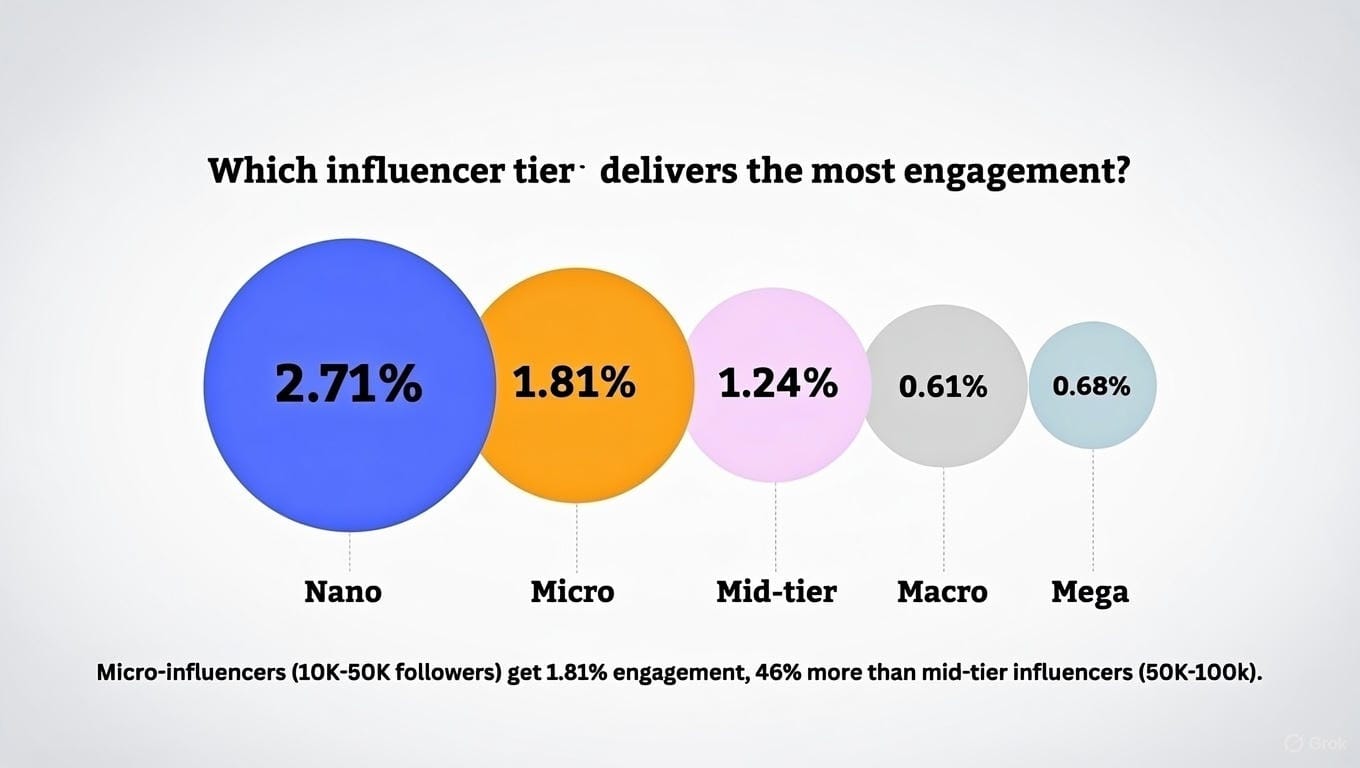
Engagement rates peak in the micro-creator tier.
Examples from recent benchmark studies:
- On Instagram, micro-influencers consistently report engagement rates around 3–4%, compared to ~1% for macro and mega creators.
- On TikTok, micro-creators regularly reach double-digit engagement rates, particularly in clearly defined niches.
- Rate-based engagement (comments, shares, saves per follower) declines as audience size increases.
These numbers do not suggest that large creators lack engagement.
They show that interaction per follower is densest earlier in the growth curve. That distinction matters because engagement metrics are rate-based by design.
Engagement Is a Rate Game, Not a Volume Game
Follower count measures potential reach but engagement measures actual interaction. When platforms, analytics tools, and brands compare creators, they normalize engagement against audience size. This is where micro-creators stand out.
A creator with:
- 20,000 followers
- 4% engagement rate
is producing 800 interactions per post.
A creator with:
- 500,000 followers
- 1% engagement rate
produces 5,000 interactions, but spread across a much larger, less interactive audience.
From an engagement-quality perspective, the first creator’s audience is:
- More responsive
- More predictable
- More participatory
This is why engagement metrics favor micro-creators—and why those metrics increasingly shape visibility.
The Engagement Density Effect
What the data reflects is not effort or talent. It reflects interaction density.
Micro-creators tend to operate in environments where:
- Audience members recognize the creator
- Responses are expected
- Participation feels rewarded
- Conversations continue across posts
This creates a feedback loop:
- Audiences interact more frequently
- Platforms detect higher engagement signals
- Content is redistributed more often
- Interaction compounds
Engagement density is measurable—and micro-creators consistently score higher on it.
Quick Reality Check
If the same followers comment on multiple posts, engagement compounds faster than follower growth. This is exactly what engagement metrics capture.
Why Engagement Matters More Now Than It Did Two Years Ago
In 2024–2025, platforms accelerated their shift toward interaction-based ranking signals. Across major platforms, content is increasingly surfaced based on:
- Comment activity
- Saves and shares
- Time spent engaging
- Repeat interaction with the same audience
Likes still matter but they no longer lead. Creators who trigger ongoing participation are favored by distribution systems because their content keeps users active on the platform.
This is why engagement leadership is becoming more predictive than follower count.
What 2024–2025 Engagement Data Signals About 2026
When trends persist across multiple years and platforms, they stop being anomalies.
Here’s the logical progression:
- Micro-creators currently lead on engagement rate
- Engagement increasingly determines distribution
- Distribution determines growth and opportunity
If these conditions hold—and all current platform signals suggest they will—then engagement dominance will remain concentrated among micro-creators heading into 2026.
This does not require a behavioral shift from creators. It requires continuation of existing patterns. That’s what makes this projection credible.
Why Most Engagement Is Still Created by Micro-Creators
The majority of active creators globally fall into the micro-creator category. This matters because engagement is produced by people, not averages.
Micro-creators:
- Post more consistently
- Interact more visibly
- Respond more often
- Maintain closer audience relationships
As a result, a significant portion of total engagement across platforms is generated by this tier, even when total reach is smaller. Engagement dominance is therefore not just about rate. It’s also about where participation happens most frequently.
How Micro-Creators Can Increase Engagement (What the Data Suggests)
Engagement benchmarks reveal repeatable behaviors among high-performing micro-creators. The patterns are practical, not motivational:
1. Content That Invites Response Outperforms Content That Informs
Posts that ask for opinions, reactions, or decisions generate more comments than statements.
2. Visible Replies Increase Future Engagement
Creators who respond publicly train audiences to participate again.
3. Repeated Formats Compound Interaction
Familiar formats reduce friction and increase response rates.
4. Narrow Topics Produce Higher Interaction
Specific audiences interact more than broad ones.
5. Engagement Is Built Across Posts, Not Per Post
Creators with consistent interaction history outperform one-off viral posts on long-term metrics.
These behaviors align directly with how engagement metrics are calculated.
Engagement Self-Audit
After your last five posts:
- Did interaction increase, decrease, or stay consistent?
- Did the same people respond multiple times?
- Did you continue conversations or end them?
Your answers describe your engagement trajectory better than your follower count.
Why Brands Are Following Engagement
Brands do not lead engagement trends, they respond to them.
As engagement metrics become easier to benchmark and compare, brands naturally gravitate toward creators who:
- Generate predictable interaction
- Maintain active communities
- Show consistent participation signals
This is why brand outreach has increased toward micro-creators in recent years.
Not because of size but because engagement performance is visible and measurable.
What This Means for 2026
Engagement is no longer a supporting metric. It is the metric that determines:
- Distribution
- Visibility
- Growth momentum
Micro-creators are not dominating engagement by accident. They are doing so because engagement thrives where interaction is frequent, recognizable, and repeatable.
If platforms continue rewarding engagement and all indicators suggest they will ,then micro-creators will continue to dominate engagement metrics in 2026.
Not as an exception.
As a structural outcome.